Imposter syndrome as a first-time manager
It’s been about a quarter since I became a manager. I’m wondering what value I’m actually adding to the organization, especially in the agentic era where skills, information, and knowledge are more or less commoditized. Here are my candid observations.
Pre-AI
I remember in 2025, I was part of a 5,000-person organization, and I was an IC3 — three levels from the junior-most rung. Above me, we had 6–7 layers until the CEO. Add the complexity of multiple BUs, conflicting priorities, random OOOs from stakeholders, 25,000 meetings per week, and 7 different “leaders” and their friends.
It would take about two weeks to stitch context, rally the right stakeholders, convince them that project X will get them promoted, figure out the escalation matrix, SLAs, project timelines, dependencies, and so on. And if your luck is genuinely bad, the project’s scope will either get changed at the end of week three, or someone will sidestep you and take the lead mid-way, or you’ll be questioned on ARR impact despite the project being a “P0” at the time of launch.
All of this to change the color of a button.
I figured out a couple of things amid all this busyness:
- Hierarchy is not about authority at all. Until 2025, it used to be about information routing — being a “router” like the WiFi router. You’re just aggregating, synthesizing, and relaying stuff, mostly because the organization is too big for anyone to see everything. Then layer in project updates, QBRs, stakeholder reviews, and leadership reviews, because everyone eventually forgets what they were working on or why, due to the complexity.
- Every manager mostly made money because routing information to the right people at the right time got that much more expensive as you ascended the corporate ladder.
- Every BU was also bloated because every individual brought in adjacent skill sets. It’s not that the people weren’t skilled, but moving information from design → prototype → engineering → QA → alpha launch → beta launch → GA required about 50–100 people to be in a tight handshake.
Sure, design → GA launch of a feature can happen in under two months. It was never about speed. It’s the linkages between stages that were the real cost — translating what the designer intended for various JTBDs into the PM’s worldview of business and edge cases, into engineering constraints, and so on. That’s where the most energy per unit time was lost.
Post-AI
Lean teams are going to be the status quo sooner rather than later. I lead a team of three to help generate $XM pipe per quarter. Prior to 2026, this would be the job of 6–7 people and would cost a lot in terms of ad spend. Time to first meeting and stage conversions would also be an afterthought, because all your focus is going into generating demand or plugging holes within the demand engine in a reactive manner.
AI and agents have fundamentally democratized skills. Everything is transferable now, and information and context are no longer the bottleneck. As a result, speed of shipping quadruples.
The designer on my team can design, do keyword/AEO/GEO/SEO-optimized copywriting, and take things live in under two days — including manager and leadership reviews.
The GTM engineer on my team can quickly query the design and campaign plan and get instant context. In a couple of prompts, he’s able to build the data pipeline, routing logic, customize CRM fields, and scrape and enrich ICP information for sequences and ad targeting. All of this in under two days.
Both work with virtually zero meetings between them.
My imposter syndrome and how I fixed it
One of my mentors once said that the three hardest career transitions are:
- IC → Manager
- Manager → Director / VP
- VP → C-suite
As a manager, I initially started as the router. I was relaying, aggregating, and contextualizing information for my team — passing the torch between my designer, GTM engineer, and performance marketer to keep the project moving.
Towards the tail end of Q1, I asked myself a hard question:
“If everyone else is doing the work, and I’m just doing air traffic control, what am I even being paid for?”
That’s when lightning struck.
I report to the CMO, and she said one thing:
“Everyone should be a full-stack marketer.”
That sounds like a great anecdote, but it’s a massive mandate in the age of AI. Here’s what I’ve realized about what a manager’s source of value actually is in the agentic world:
1. An agentic manager blurs the lines between roles.
Within the marketing and larger GTM organization, the job is to remove the friction in handoffs, alignment, and context-sharing — not to be the one who orchestrates it manually, but to build the conditions where it happens organically.
2. An agentic manager must end silos.
If there’s one thing I hate, it’s siloed work. Nothing great has or will ever come out of it.
In the past, stakeholders in a project worked sequentially:
copy → design → landing page optimization → scraping / building lists → paid and organic media → reporting → campaign optimization
It seldom started with problem statements, baselines, or deliberate bets. Debates between teammates were purely operational, not strategic. No one learns anything new. Campaigns never compound, and you reset the clock every quarter instead of building on the previous one.
As a manager, what I need to enable is parallel work on the problem statement, aligned to the individual capacities of any given campaign.
Every campaign is unique, even if you’re hitting the same target account list. Your method of distribution is different, your offer is different, your campaign goals are different. My success as a manager largely depends on my team’s outputs.
It makes zero sense to keep hitting operational roadblocks due to a lack of transferable skills or shared context across campaigns. There’s no marketing leverage being built. After a decade in marketing, I’ve realized that marketing is a lot of grunt work. AI reduces that — but it doesn’t eliminate it.
The real leverage comes from aligning capacities to skill sets. A live example: we were trying to improve form conversion rates on our website — the single biggest driver of leads. I got my designer and GTM engineer to spend 70% of their time building an airtight business case document (no meetings) covering:
- Audit of existing UX issues, benchmarking best-in-class, and an RCA on why companies across revenue bands went a certain direction — and whether it’s relevant to us
- All the paths that ICP vs. non-ICP visitors take, along with source, sessions, and performance data for those pages, so we know where to double down to reduce time from homepage visit → form fill
- Form page metrics: sessions, engagement, bounce, etc.
- Form completion → time to first meeting
- Qualification, scoring, and routing for all variations of visitors
- Meeting prep for the SDR team
The humans spent the bulk of their time getting clarity on the problem statement and thinking holistically. All of this serves as the base context before anyone opens their LLM window blindly. In parallel, the team picks up those problem statements and works with AI, MCPs, and skills to build a deep understanding of the six steps above. Once everyone has the same level of clarity, execution happens at high velocity. The designer isn’t dependent on the performance marketer for data. The GTM engineer’s POV never conflicts with design direction.
3. An agentic manager has to kill the “big launch identity.”
I’m a proponent of continuous improvement. Big releases do happen, but we don’t live and die by them. We live and die by meaningful daily ships that move the needle month over month and quarter over quarter. Every week, the cadence is to tighten the problem statement, self-identify things to improve across projects, and ship with a common context foundation, powered by agents and AI.
How we actually work
Skills repository
The marketing team works out of GitHub. We forked skills from marketing-skills.com and skills.sh, reverse-engineered outputs from other teams, contextualized them to our organization’s needs and constraints, and built on top of them.
You don’t necessarily have to start from scratch every time.
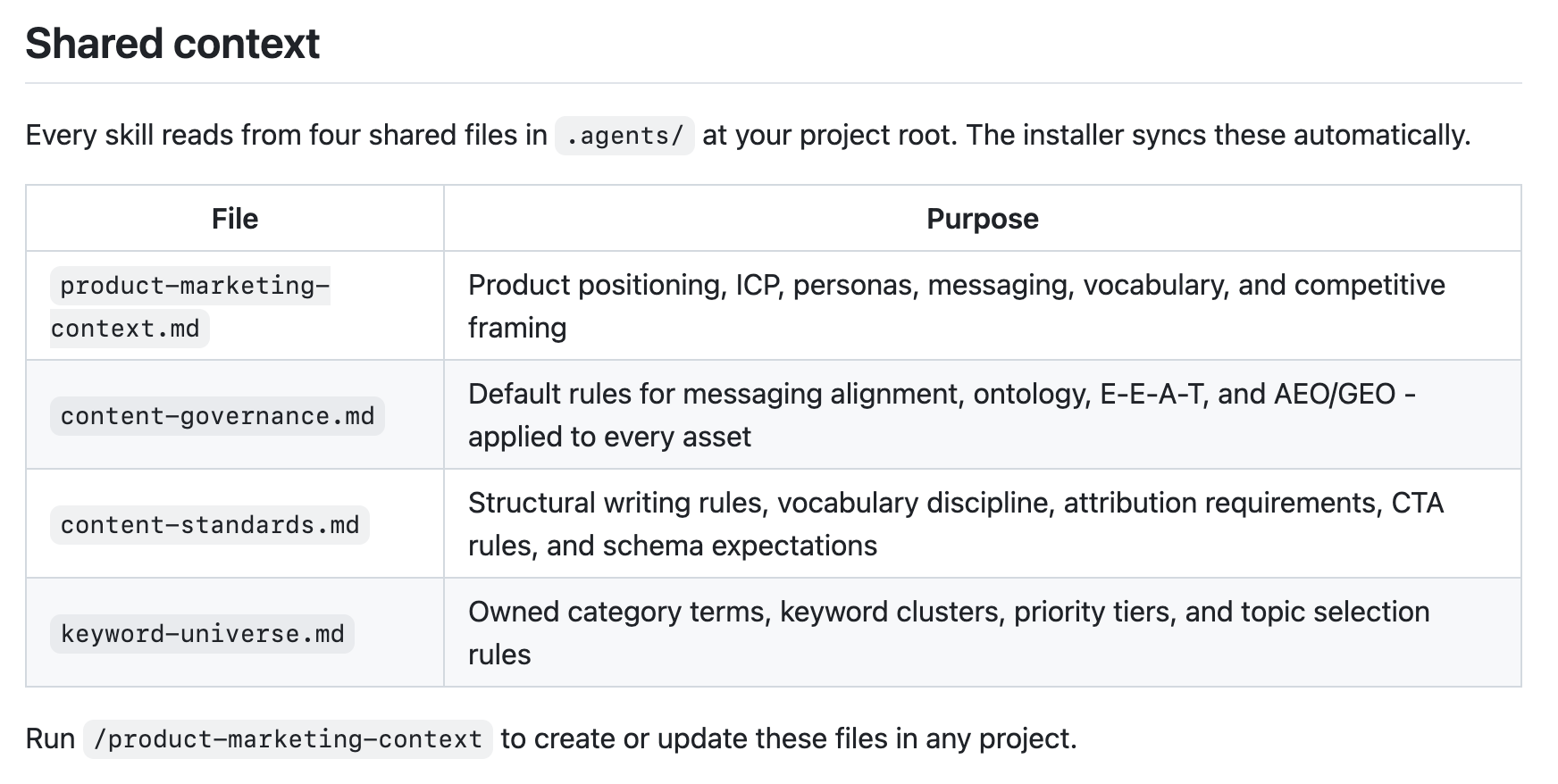
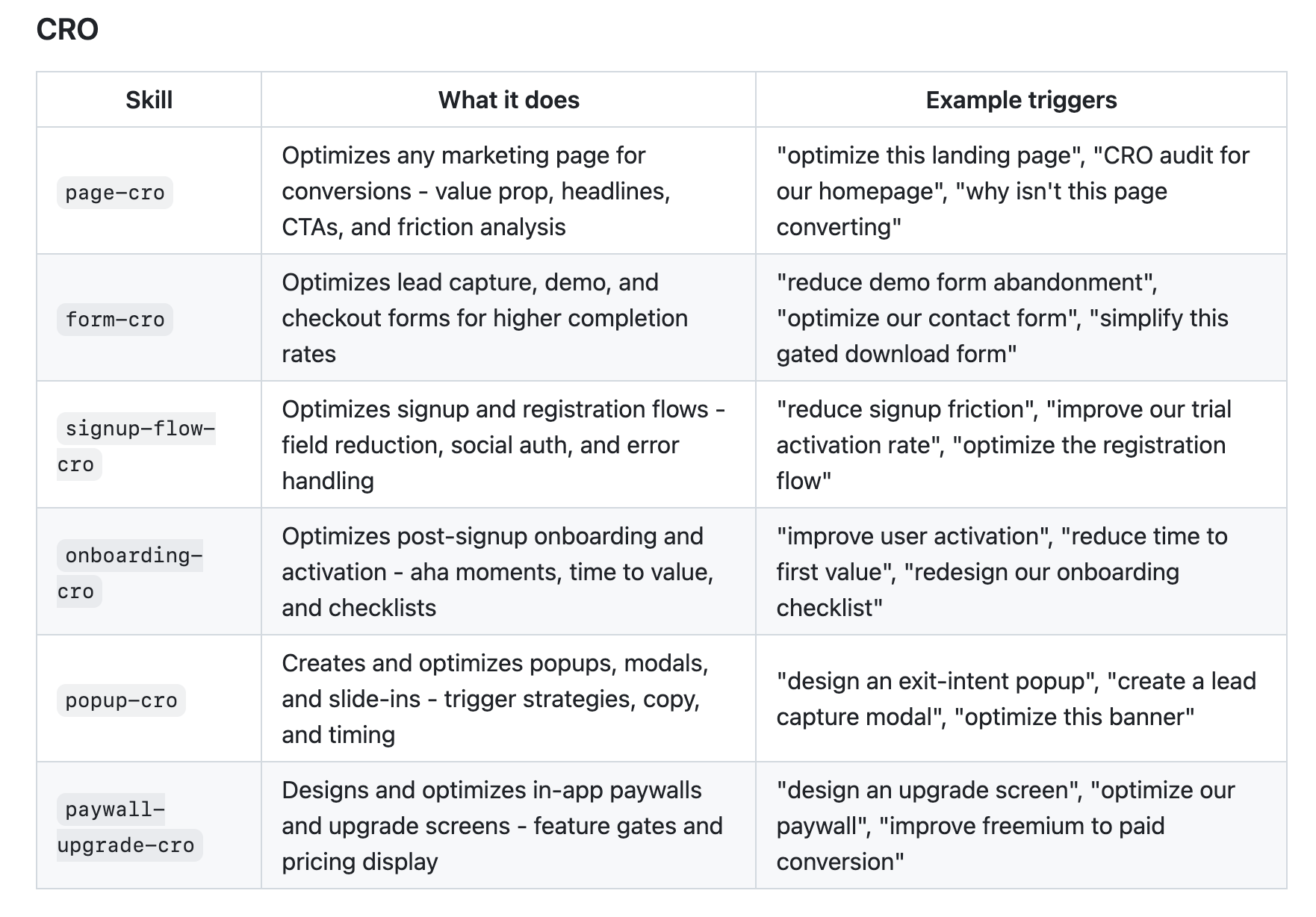
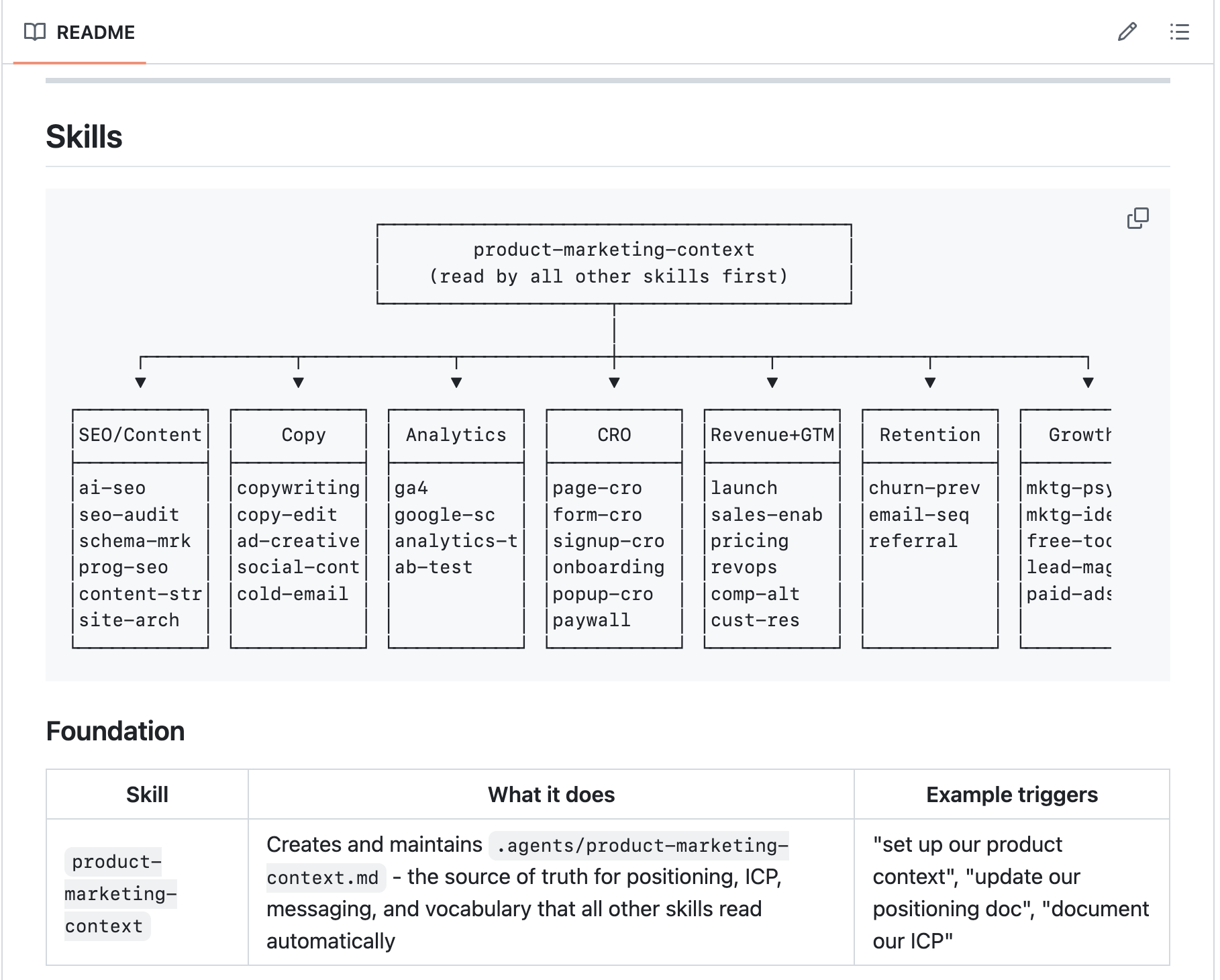
I constantly maintain this repository and ship skill and workflow updates every week. I also do a virtual lunch-and-learn with the team on how I’m using it, and how I would if I were in their seat.
Change management must be led from the front.
Workflows
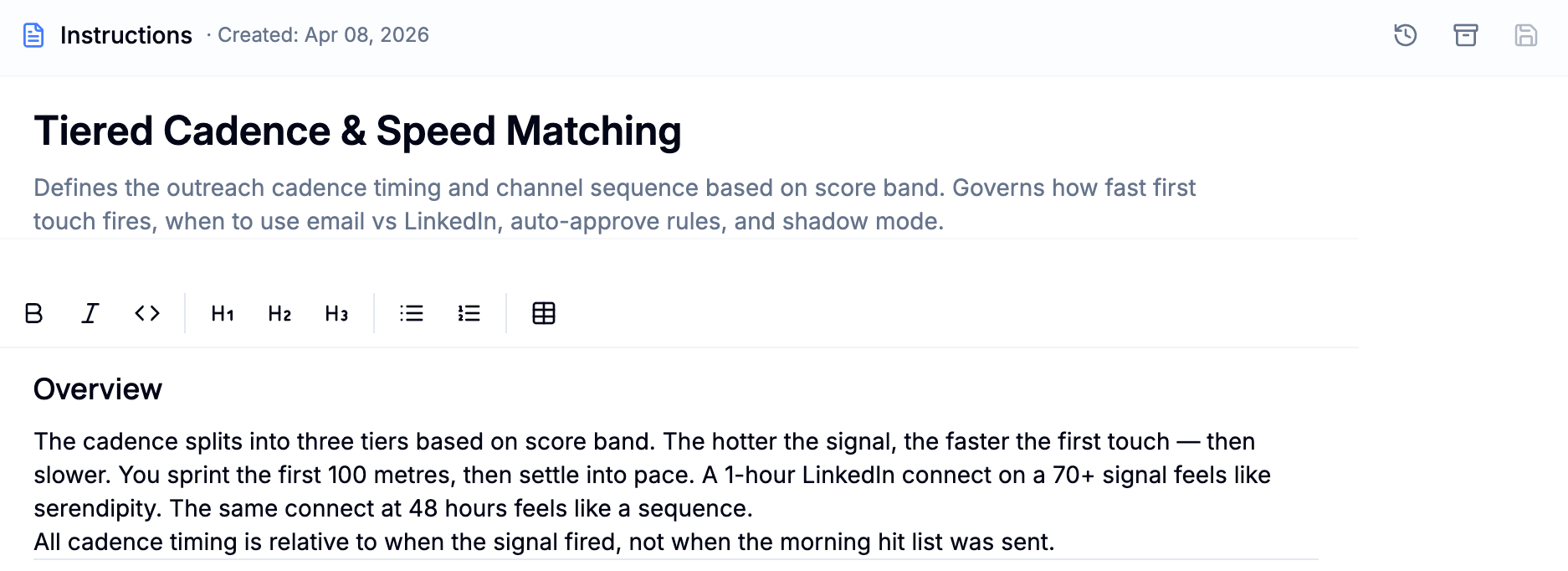
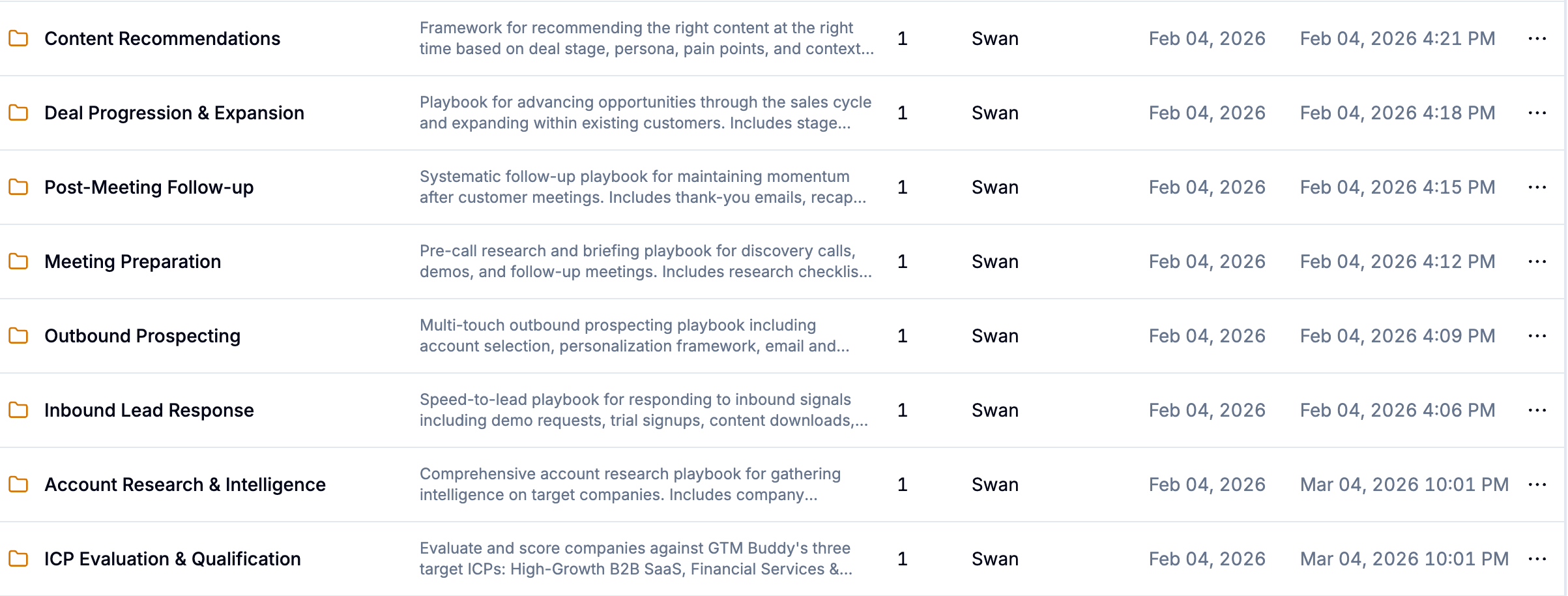
We use SwanAI for automating GTM workflows from Slack — deanonymizing website visitors, crafting personalized hyper-contextual outreach messages (automating SDR work), account research, deal and pipeline reviews, sending data to CRM, and much more. We do a lot of “Vibe GTM” and prompt our way through ensuring GTM runs smooth.
Wrapping it up
As an “agentic manager” — and this holds true for any manager, anywhere — my roles and responsibilities are to:
- Coach and elevate performance. The leading indicator for me is that ICs work on increasingly complex problem statements over time.
- Work once, automate it next time. The team has a clear goal: never do the same work twice. The team is incentivized to automate their work at the end of every project. If you started a task at 0% last time, you have to start it at 40% the next time.
- Only work on tasks closest to revenue impact. Say no a lot more. A key goal I’m constantly working on with the team is sharpening their judgment so they know what requests to pick up and what to push back on.
- Average revenue per employee is the one metric that matters. Everything else follows. If my designer is working on redoing the website, they’re required to make design decisions reverse-engineered from what will move the revenue needle. Aesthetics and vibe need to be the consequence, not the driver.
- Reframe the reward. The dopamine hit needs to shift from promotions and titles to how the market responds and whether you’re hitting your revenue goals.
- Documentation is everything. Every month, I train my team on skills. For Q2, it’s stakeholder management and building a business case. The ask is to write a detailed, data-backed document and email it to me. I find ways to shoot it down. They push back with stronger arguments. We spar on email — this improves multiple skills, especially managing upward.